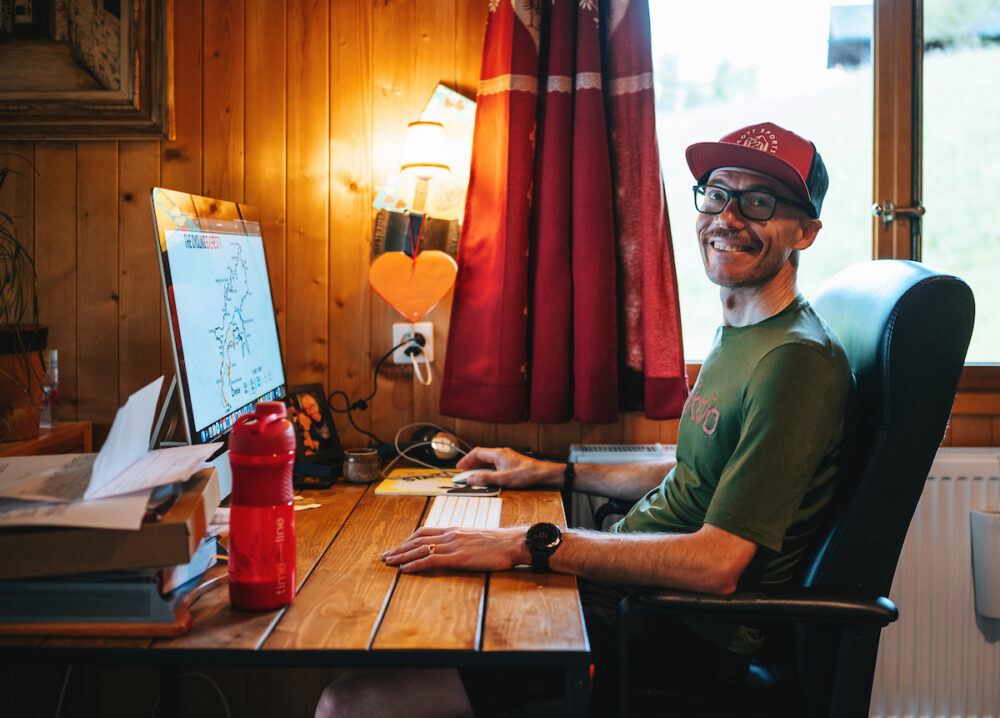
It’s that time of the year. I’m sitting at home trying to write a review of what I’ve done since my last review. Like everyone, I want to make some sense of what happened in 12 months, I want to find the elements of a good story. But it’s hard.
Why? Because there’s no underlying scenario. It’s just life happening over an arbitrary period of 365 days. Some stuff is awesome, fun, fulfilling. There are sad, sometimes tragic moments. But most of the time, it’s average.
We humans are the ones who want to give sense to life by connecting dots that tell a story. It’s what keeps us going. It’s a good thing, but somehow I’m just not in the mood. I guess that I’ve read enough yearly reviews by others on social media so far to add mine to the list. The world does not need one more yearly review.
I’ll stop here because I realise this sounds depressing and I am in a far better mindset. Instead I’ll just list a few random things that happened to me over the last 12 months:
My beautiful mum turned 80
I took a shit load of pictures, including a small number of good ones that I am proud of
I rode my bike in the Dolomites, and that’s enough to make it an great year
I got cold, hot, wet, dirty, hungry and thirsty on my bike (fortunately not all at the same time)
I skied powder
I ran a lot in ski boots, got very cold and failed to finish the Patrouille des Glaciers
I only cracked a rib
I got one year older with Lillie, my rock
I yelled a lot at Lillie while she was becoming a better photographer (she did get better, and of course my yelling did not help)
I spent another season riding and shooting photos with my buddy Luca, and it was awesome as ever
We watched our son Ben grow up. His yearly review includes: jumping into an airbag with his mountain bike, riding down the Rhine in 5 weeks with Lillie, taking up tennis, taking up piano, learning how to read. Now that’s a good story
I kept my business afloat, maybe I even grew it a little
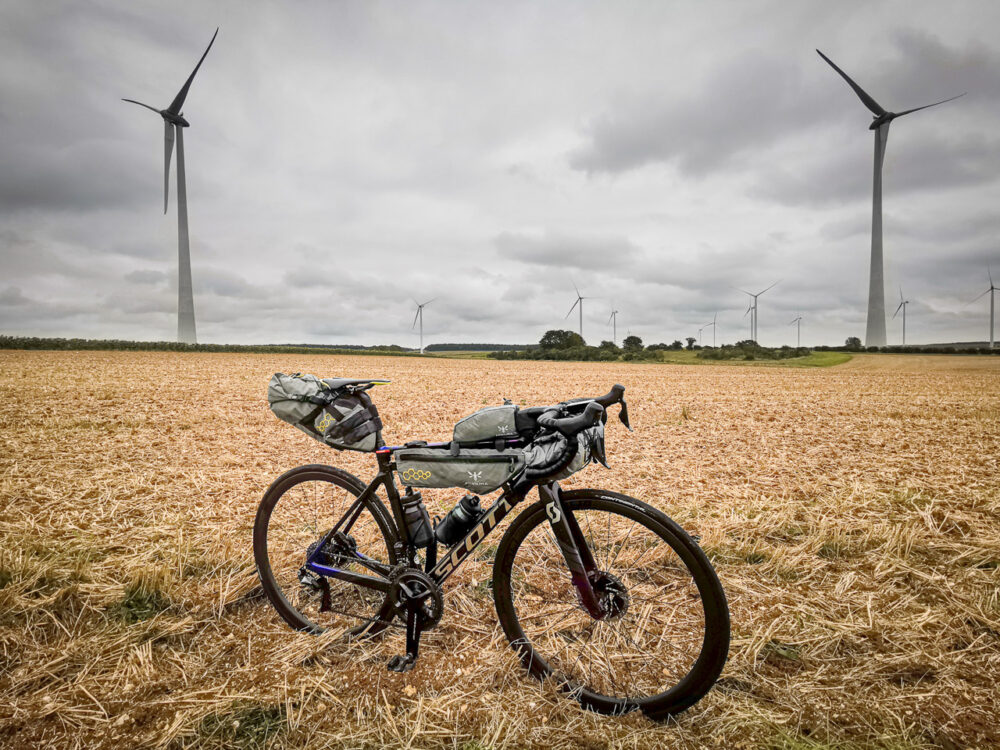
I managed to pack my bike, fly with it and rebuild it on the other side, with just a little help. As a result, I rode awesome gravel in Finland and made new friends
I learnt a lot about ADHD
I didn’t do enough strength training
I drank good wine and ate fine cheese
I had a few sleepless nights worrying about meaningless shit
Again, I didn’t pull the weeds on the tiles in front of the house and it’s an absolute mess
I spent way too much time on video calls (the worst nightmare for an introvert).
I just got a powermeter and don’t know what to do with it.
Can this make a good story? I think so, but I’ll leave it here. What lies ahead? I don’t know, nobody knows. There’s no script. It’s just life happening.
As a consummate procrastinator, I meant to write this yearly review on December 31. Then I remembered that I had an invite from my friend Damien to ride around Lake Geneva on that day. 167 kilometers on a mad group ride in spring like weather was a nice way to finish off a pretty darn good year. The yearly review would wait.
According to a well known orange app, this ride brought my 2021 mileage to 10998.3km. And no, I did not get back out to ride another 1.7km before midnight once I saw it. Instead, I enjoyed a nice New Year’s Eve with Lillie and Ben, capped with a dinner of spaghetti con vongole washed with kid’s champagne.
Taking photos
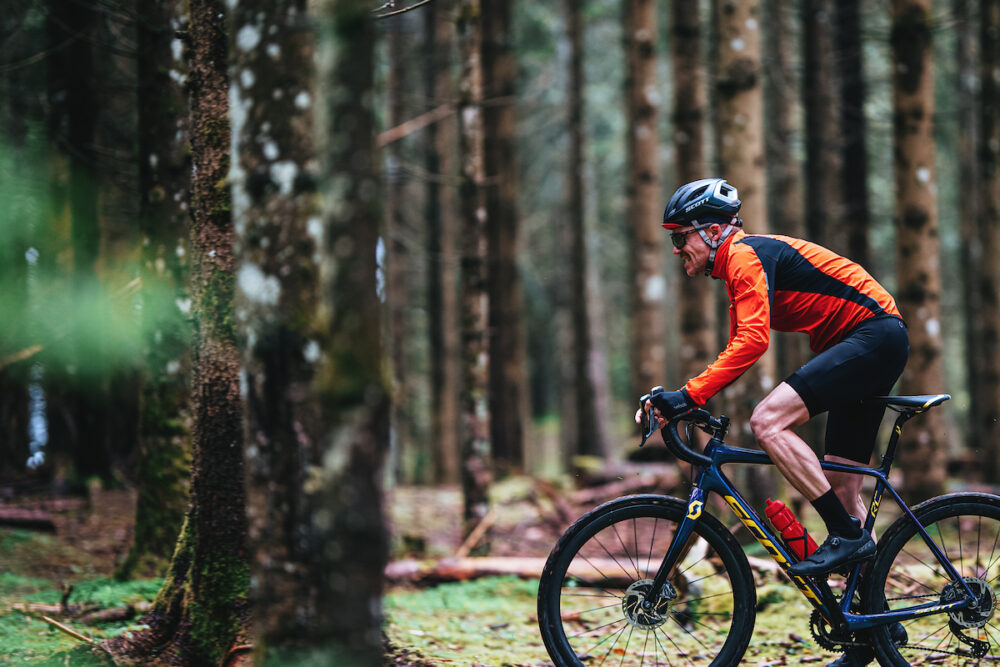
Anyway, I’m writing this in 2022. And thinking of the past year brings a big smile on my face: I had many great, great moments. First and foremost, I spent a lot of time doing what I love: ride my bike and take photos. Exactly 17’226, according to my editing software. About 99.5% of them were crap or just average, but I did get some nice ones. And more importantly, it just made me feel good. I love the process of trying to create beautiful images. Ones that will convey my emotions as I ride my bike: man, what a beautiful place! This is an awesome day! Riding with friends is so much fun! No way, a hailstorm! Oh that climb hurts, this is type 2 fun at its best! You know the deal.
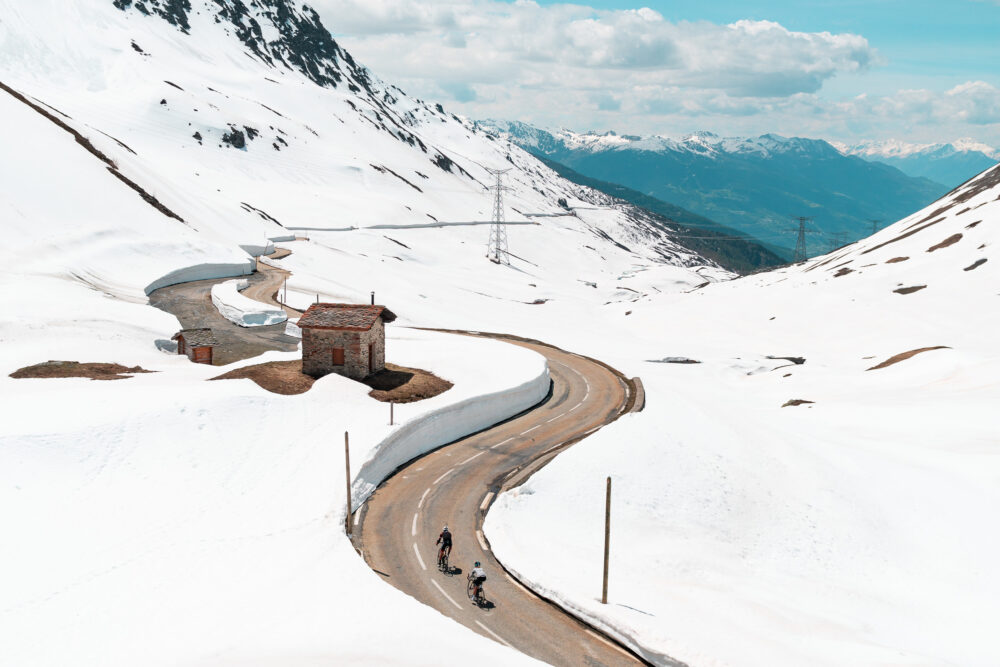
Successful snow bank expedition on the French side of the Petit Saint-Bernard with the Alpcycles crew
Big bike rides
I also went on a number of stupidly long rides, something I have come to enjoy more and more. I just love the simple pleasure of riding all day long, eating all I can and moving slowly but surely across changing landscapes. This is where I manage to truly disconnect from the daily grind and just get lost in my thoughts, something I badly need as an introvert.
In August, I went to visit my daughter Wendy who lives near Tours in France. To get there, it took me two days of riding west, most of the time with a head wind. And surely enough, I did not get much of a tail wind on the way back a few days later. There were few climbs apart from the crossing of the Jura and the Morvan, a small but beautiful mountain range I didn’t even know existed (check out my route on komoot here).
In fact, I spent most of my time riding on deserted, flattish roads with a rough surface. There were few villages, and even fewer places to fill my bottles or get food: that part of France is a sad example of rural depopulation.
Sounds bleak, right? Not from a bike. This is the best way of getting to know a region. The geography with the little undulations on the road, the rivers. The economy: what do they grow in these fields? Where’s the next big town? The weather: where are these rain clouds moving? Answer: generally, towards me. I have no time to get bored on a bikepacking trip. And last but not least, there’s boulangerie hunting. Bakery stops were amongst the highlights of my trip and I’ve never eaten so many pains au chocolat, which are the best food when bikepacking: chocolaty sugar, buttery fat, salt and the best calorie-to-taste ratio out there.
To keep myself entertained, I also shot videos from my phone, which I shared along the way (see the highlights here, which include a lot of pain au chocolat munching).
A big, flat and windy ride
A very long race
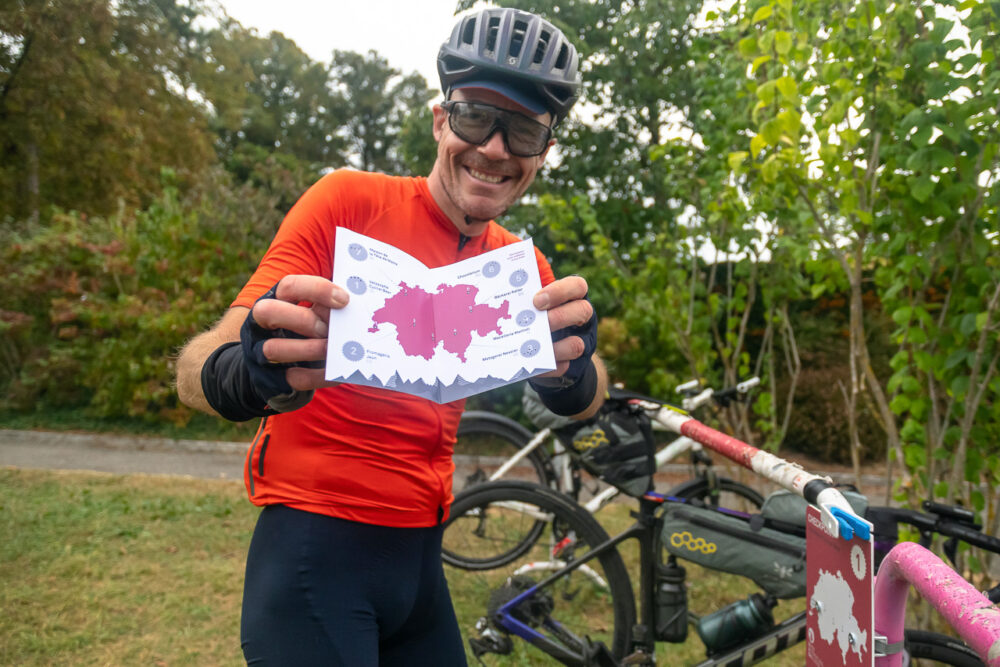
All these long days out made me strong. Not fast, just strong. I used that fitness on a few events, including the Swiss Ultracycling Challenge organised by my friends Vincent and Marc. It is a race and we got a numbered cap, but it is a fun challenge above all: everyone starts at 10.10am on the same day from a train station of their choice and the goal is to ride in all of the 26 Swiss cantons (provinces), stop at 7 checkpoints and finish in front of the Swiss Parliament Building in Bern.
It took me 57 hours and 43 minutes to get there and I went through every possible mental state along the way, which is pretty much what ultracycling is about. Expect a story on this here or in some media soon.
Last checkpoint in Geneva on day 3 (photo by 53×11.studio)
Family cycling holiday
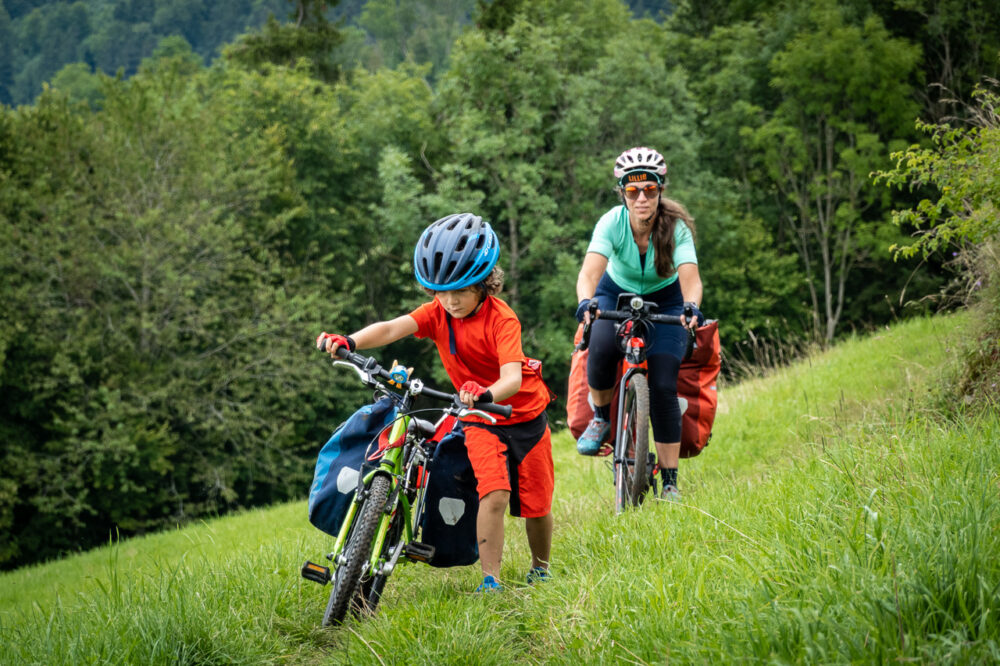
Watching our son Ben grow up is filling me with joy. He turned 6 in October, goes faster than his mum on skis and loves riding his bike. In August, we went on a gravel bikepacking holiday on the SuisseMobile Jura Route. It is officially a mountain bike route but 98% of the section we did is on car free paved or gravel roads that are perfect for a family adventure (check our route on komoot here). The remaining 2% sent us on gnarly singletracks or cowshit covered trails and some tears were shed. Nothing that ice cream stops couldn’t fix, though.
We camped and stayed in small hotels. We even spent a night in a tepee. I went to the emergency room after stabbing my foot trying to move Lillie’s e-bike during a freak thunderstorm. Ben crashed only once and kept on riding like a boss in spite of the five drops of blood that came out of his arm. We are so proud of him and can’t wait to go on another bike holiday together – if anyone has a suggestion on where to go next, give me a shout!
Teaching our son the subtle art of underbiking
Hanging out with Lillie
Throughout the year, I also got to spend meaningful bike time with my wife. Lillie is on a long journey to recover from burn out (read her story here) and setting herself big scary athletic goals is part of her therapy to teach her body to deal with stress again.
With that in mind, she decided to participate in Dead Ends and Cake, a 480 kilometer bikepacking event in Eastern Switzerland. As the name indicates, it is about riding to five check points located on dead end roads and eat cake at each of them. This sounded so cool that I made a last minute decision to join her and document her challenge.
These 3 days were simply awesome, for many reasons. We discovered parts of Switzerland we had never been to. Like the Safiental, a long and quiet valley south from the massive Rhine Gorge. The round but oh-so-steep hills of St Gallen and Appenzell. The Kunkelspass, secret gateway to Graubünden. We also met many fellow participants on the way, from all walks of life. Mario, Andy, Emma, Sara and everyone else: it was so much fun to share this experience with you !
Above all, we just hung out together, laughing and chatting away as the kilometers were ticking. And I got to support my wife in her challenge, which sounds very much like her fight against burnout: there were ups and downs, dead ends, tears of joy and exhaustion, small victories, grand plans that got crushed and clever B plans. And cake. And beer. Thank you Dominik for putting on this event with an awesome vibe event and giving us the opportunity to share this time together.
Lillie eating cake at a dead end
Follow the guide
Apart from taking photos, guiding is another way to share my passion for cycling that I enjoy a lot. Pandemic times are limiting opportunities but I spent a few fantastic days taking like minded cyclists on my favorite roads. Amongst other, it was an honour riding on my home roads with Doug to celebrate his 60th birthday. Coming all the way from Singapore, Nick had a bit of a shocker on the mighty Grosse Scheidegg but he loved it (or so did he politely say). I rode 3 days in Valais with Sander and Ruben from Holland. And I got to guide Thomas from Belgium on two separate occasions to shoot stories for Belgian magazine Grinta.
In July, I hosted a trip for InGamba as part of my collaboration with the Gstaad Palace. The weather was amazing (we got lucky as summer was quite wet in the Alps) and it was a huge pleasure to design the tours and guide our guests on the roads around Gstaad.
Guiding and modelling. It’s a tough job. Photo: Thomas de Boever
Off the bike
I am lucky that I’m able to share my passion for cycling even when I’m off the bike. In April of 2020, Lillie and I took over cycliste.ch . It’s a blast to run the site, which caters for the Swiss French cycling community. We have a great team of local contributors who love to share stories with fellow cyclists. For me, it’s a way to share my work in French and engage with a local audience. We are also offering a platform to race organisers and anyone interested to reach an audience of more than 12’000 unique visitors per month.
Working with tourism boards is certainly the least instagrammable part of my work but I love it and it’s meaningful. Helping destinations to attract two-wheeled visitors means promoting low-impact tourism, giving cyclists the opportunity to ride their bike in new places and helping remote regions to create new revenue streams to sustain their local economy.
Helping my home region to make cyclists feel welcome
Project 50, sort of
Last but not least, I turned 50 this year. A big milestone I celebrated with family and friends on a beautiful and cold November day in a mountain refuge. Yes, time is ticking but I don’t see it as a threat – yet. First I am lucky to be healthy and even if I am not getting any faster with the years ticking by, I can still achieve pretty much anything I can dream of. For me, turning 50 is an incentive to make my projects come true rather than adding them to my to do list. I feel I certainly did that in 2021 and will strive to keep doing it in the years to come. I even made a public announcement that I will share my experience and so far I have spectacularly failed at it, because I am a procrastinator at heart.
One of the awesome photos shot by the talented Jered and Ashley Gruber for the launch of Project 50. I’ll use them before my 60th, promised
The low points
Of course, not everything was rosy in 2021. And I’m not talking about the C word. Was the Tour des Stations a low point? I made it a big goal to finish this race with 8848 meters of climbing (yes, some Everest marketing is very appropriate for this really hard event).
I trained a lot and had a good chance to succeed. But, like many participants, I did not expect the thunderstorms forecast for the late afternoon to come, well, earlier. I was still climbing to Thyon 2000 when they hit me. Between me and the finish were a big downhill and 1500 meters of climbing. 37 years of riding my bike had not made me smart enough and I only had a windbreaker with me.
Needless to say, I didn’t last long. 5 kilometers into the descent, I had to stop in a pizzeria, the first place I found to take shelter. Javier, a fellow racer was already there, and we were soon joined by two other participants, Sven and Daniel, around the pizza oven that the staff restarted for us. As we shivered less and less and laughed more and more, we got to know each other and shared epic cycling stories. There was no way I was going to try and finish the race, which was anyway cancelled moments later as it got just too gnarly in the mountains. Lillie came to the rescue and drove me and Sven back to the start. I failed to conquer my Everest but all was good, the training was fun and I can only smile when I think of this experience.
Struggling at times to keep a positive mindset was more of a low point. It’s been a challenging year for everyone and I discovered that mental health is not something you have to worry about only when you start having suicidal thoughts or you are not able to get up in the morning.
It is like physical health, which is more than taking care of your body when you break a bone or you are in bed with the flu. Looking after your body means to listen to it, to treat the little nagging pains before they get bigger and to rest when your inner voice tells you to. It’s the same with the mind: #shutuplegs is not a motto you want to apply to your brain. I have space to improve and I need to accept that some days are better than others, and it’s alright.
Anyway, I rode 10998.3 km this year and I had a blast. Thanks to my partners and supporters for making this possible:
As you know how good a procrastinator I am, don’t expect a 2022 goal setting post before July. Actually, don’t expect one at all. Happy New Year everyone!
I’m turning 50 this year. At first, I brushed it off and thought it didn’t matter. But of course it does.
5…0…! It really hit me when I entered a local race and found out I was in the 50-59 category. And it got me to reflect on what it means. Like, on where I come from…
My love affair with cycling started so long ago; I was 12. I joined the local club and riding became my life. Racing taught me discipline and self-reliance. It gave me the confidence needed that I needed as a shy teenager to develop into the man that I am.
Through the many places I have visited by bike, I now truly appreciate the beauty of nature. On my saddle I have had the privilege of meeting amazing people, many of whom became great friends. I met my wife on a velodrome and our 5 year old son will soon outskill me on his mountain bike.
Cycling is my tribe and my lifestyle.
It’s also my job. I love my work as a photographer, storyteller and bike guide, it’s a dream come true.
But I am also aware that I won’t be doing this forever. There’s still so much I want to do and time is ticking.
Am I scared? No, I’m stoked.
Now is the time to live and make things happen, to follow my guts, to get off my screen and to spend time outside. This sense of urgency is great; it’s my biggest incentive to get out there and just tick things off the list.
Like climbing new mountains with my buddies. Ride and shoot photos from sunrise to sunset. Go bikepacking. Spend family holidays on the bike. Put a number on my back and smash my legs like I was 20 again.
But alas…I’m not 20 anymore. I’m 50.
Gone are the days when my learning curve was steep and I was making big progress season after season. I’m still learning and will always do but now is about optimising. Using my experience and preserving my physical abilities as long as I can. More than before, I respect and understand my body, and I focus on nutrition and recovery. To be able to push hard when I can.
As the saying goes:
You don’t stop cycling when you get old, you get old when you stop cycling.
Project 50 is about sharing my experience as I age, as a cyclist and as a human being. On this blog, I will look back at my life so far and look ahead at what drives me and what I want to achieve.
But I do not wish to be a role model: some super-human who is capable of doing more than others. No, I wish to share my life experience with others so we can all find joy, health, nature, and a truly amazing quality of life through cycling. Project 50 is a community journey.
I’m curious to see what happens… At worst, no one will give a damn but I will get a better understanding of where I’m at and where I want to go. At best, I will connect with fellow humans and we will inspire each other to get out there and do things we love, on or off our bikes.
Let’s do this!
Alain
Thanks to the great people at Time-Line for supporting Project 50 and backing this awesome video:
In this third article of a series on the mind and body struggle against everyday stress, my wife Lillie talks about the various sources of chronic pain and how to break free from the pain cycle. Click here forthe first article and here for the second.
This week I need to ride 450km in 3 days to complete a race called Dead Ends & Cake. As the race is in Switzerland, of course a total of around 8000 meters of climbing is also included. Oh, and I should mention that I only just started to ride my “unassisted” road bike again in April since my illness in August 2019 (see articles 1 and 2).
So coming from a base fitness of ZERO, how am I actually going to be able to accomplish this? Without hurting myself that is. It’s actually quite simple. I’ve taken the immortal words of Fausto Coppi to heart…ride a bike, ride a bike, ride a bike!
So to get better, I simple ride. I’ve been riding a lot. As part of my training, I of course needed to test my ability to ride 150km. Inspired by another cycliste.ch contributor to discover some backroads up the Col du Mollendruz, I decided to test last month what I could physically accomplish in a day.
Sitting on that tiny little saddle made of who knows what becomes miserable, and I start shifting, standing, anything to find a non-painful spot to sit on.
I could barely turn my head to make turns and signal in Morges traffic as my shoulders and neck were so stiff from holding my head up all day.
And my hands, oh that was the worst…they were tingling with the occasional shooting nerve twinge that I was trying to avoid like COVID. Opening my little bag of gummy candies was almost torture but necessary to feed this hungry beast.
But this “ordinary” pain was one of the most amazing happy experience I’ve had in my now almost 2-year recovery process. I was literally in tears of joy. Why? I had just spent 10 stinkin’ hours on a bike. All of these pains were totally normal…to be expected as it’s been years since I’ve ridden so long. Woohoo I’m fucking normal!!!
And like a normal human being, my body healed. After a nice meal, a beer, and a good night’s rest, I felt totally great the next day, ready to ride another day.
A happy cyclist enjoying a well-earned “real” coffee at the Grand St. Bernard Pass
Life in chronic pain
Almost every single day since August 2019 I start my day in pain. On good days its mild burning in the muscles. On bad days the stabbing dagger pain is so intense I have to brace myself and resist fainting and vomiting from the overwhelming scale of it. Thankfully over the last few months my pain has been reduced to mostly annoyance, and even on bad days I know the pain is only temporary.
Every day that I have this pain, I have to remind myself that this pain is based on nothing physical. Yes, my muscles are tight, my joints hurt, nerves are pinched and throbbing, and I feel the resulting pain. But there is nothing physically wrong with me. There is no injury! But since August 2019, I’ve been struggling with restricted movement from fascia adhesions that can leave me in crippling pain nonetheless.
A short informational video about fascia. Many thanks to our friend Tim who shared this video with me after my first blog post.
But how does muscle fascia get damaged if not from injury? Simple, our muscles also tighten under stress—it’s an auto-immune response. The more stress the body is under, the more the muscles deteriorate and the worse the pain becomes. As an example, think of knots in your neck and shoulders that build up after a long day in front of the computer. Imagine if those knots lasted days or even weeks? It would not be a pleasant experience.
By October 2019, 2-months after my illness started, I had so many adhesions throughout my body that my physiotherapists didn’t even know where to begin. I was crippled over most days like a 100-year-old woman (actually, my gma is 101 and in better shape than me!). I was under heavy pain killers just to do basic tasks, just to get out of bed most days. There was so much damage and so much pain pretty much everywhere that it was difficult to find the source. It took months of intense massage to clear and smooth most of the fascia. But even after almost all of the knots were completely removed, they would keep coming back. Why were my muscles constantly tensing up even after therapy?
The e-bike was my savior. I was told by chronic pain specialists that movement was what I needed to escape the eternal pain cycle (see below). And they were mostly right. Every day that I ride my bike, no matter how terrible I feel when I start, the pain almost always disappears within the first hour of riding. But the pain would always come back after exercise. The same knots would come back in the same places no matter how much exercise or physical therapy I did. But why?
To understand why, first we need to understand where pain comes from.
So, what is pain exactly?
We all know it. We all feel it. But where does it come from? Why do some people seem to have infinite tolerance for pain and others not? Some people are able to completely ignore pain to reach a goal. Others quit on the first tingle of discomfort.
Traditionally the sources of pain were broken into 3 categories:
Pain from some sort of physical injury (e.g. broken limb, bee sting)
Pain from the inflammatory response to the injury
Pain as a result of damage to the nervous system from the injury (e.g. pinched nerve)
Pain should go away with time as the body heals, especially with the first two types. The third type is more complicated as nerves don’t heal as well as other parts of the body, and therefore damage to the nervous system can certainly lead to chronic pain that lasts a lifetime. Things like paralysis and phantom limb fall into this category.
However, sometimes the source of chronic pain can be extremely obscure. Millions of people across the world suffer from chronic pain with no recognizable physical origin. It is a problem on epidemic proportions.
Stress hormones and the auto-immune response
Thankfully, lots of research is now focused on how the endocrine (hormonal) and immune systems play a key role in how pain is perceived by the individual. Pain is an auto-immune response to tell us when something is wrong. This “pain perception mechanism” is developed from early life experience and determines how our bodies will process pain for the rest of our lives.
But our bodies pain perception can also be shifted by trauma, both physical and emotional. My pain perception was shifted by emotional trauma, which may be the case for millions of chronic pain sufferers. The source of pain, many researchers theorize, is trapped in the unconscious mind. And unfortunately, the endocrine-immune response effects the mind and body in such a way that chronic pain sufferers become literally trapped in an eternal pain cycle.
Our bodies are incredible at doing whatever it takes to keep us alive. A key mechanism is the endocrine system. If you have ever overcome a truly dangerous situation, you understand exactly how the system works. Your heart rate jumps. Hormones like adrenaline and cortisol kick in. You feel a burst of energy throughout the body. Your head is clear and all the sudden time seems to slow down. You can take action to do exactly what you need to do to survive. It is an automatic response to an external danger. It can be triggered in an instant and give you superpowers to overcome enormous pain or physical obstacles. It is an incredible part of our auto-immune system that has allowed us to survive as a species to this day. This system is likely responsible for helping you survive some of those “Type 3 fun” errors in judgment.
In the past I followed the HTFU mantra: suck it up, ignore the pain and push on. I am extremely strong willed…I don’t quit! As I describe in article 2, I’m not afraid of suffering. Perhaps I even embrace it. My pain threshold was very high.
This attitude has allowed me great success in life. But it also caused my illness—because I no longer listened to the pain signals my body was sending. I shoved aside and ignored what my sensory brain was telling me in order to accomplish my conscious goal. Until one day my own unconscious mind fought back with vengeance due to a perceived danger. I didn’t know the monster I was suppressing, the overwhelming scale of my unconscious rage. The conscience mind doesn’t stand a chance to win against the unconscious.
My burn-out was an auto-immune response to an external stress. I had buried years of emotional manipulation and abuse at my workplace deep into my unconscious mind. And one day my consciousness woke up and saw it, and I had an overwhelming endocrine response. Just like if I was about to be attacked by a bear. As a result, my body’s alert system associated my work as a place of danger. Because I continued to go to work after the shock, my unconscious mind triggered the nervous system to generate pain as a deflection from the true emotional burden I was living. Only once I was able to cope with the emotional source of trauma, thanks to various forms of re-education and psychological therapy, in combination with physical therapy (chiropractic, osteopathic, massage, acupuncture and specific muscle rehab exercises), did the physical pain finally start to subside.
To better understand how the auto-immune system works to induce pain, I highly recommend reading The Mindbody Prescription by Dr. John Sarno. An excellent summary of the book can be found in the video below.
So this is my journey…overcoming the trauma that triggered my pain perception system to process stress as pain. Much of my journey is learning how to manage stress through mental exercises and mindfulness, and slowly discovering the multiple sources of trauma which continue to trigger my pain.
But the key component to my healing has been through exercise and physical stress—I have to reteach my body and mind what is “normal” pain versus what pain can be ignored. Saddle sores cause physical pain. Repressed shame, regret, and anger should not. In essence, I need to rebuild my pain threshold. It is indeed a long journey with lots of ups and downs but it is the adventure of a lifetime that, in the end, will only make me stronger. It really is just as simple as Fausto Coppi said, to get better, ride a bike, ride a bike, ride a bike!
P.S. Along this journey I have met many people who have suffered from burn-out and chronic pain, often in places and with people that I least expect. Last year Alain crossed paths with german journalist Anke Eberhardt for an article that was recently published in Sidetracked. As she had similar pain symptoms for years we of course shared our experiences. I told her about Dr. Sarno’s book and she bought a copy. She said it was a revolution in her healing process and has also shared it widely. And others in the cycliste.ch community have shared with me similar experiences of pain relief after dealing with personal trauma. We often seek solutions for pain with external treatments and forget to look within. A healthy mind may not heal everything, but it certainly is a key factor in healing and maintaining good physical health.
In this second article of a series on the mind and body struggle against everyday stress, my wife Lillie talks about how we can all accomplish great cycling challenges if we are willing to step out of our comfort zone. For the first article, see here. For the third, click here.
When I started the Torino-Nice Rally (TNR) with my husband Alain in September 2019, I had only one functioning leg and an embarrassing pain-killer habit. By the time we finished, 7 days later, both of my legs were working and I had cut my pain meds in half.
I don’t really know how many miles I rode. I don’t know how many meters I climbed. I don’t know my average speed or how many hours I actually spent in the saddle. I never uploaded my GPS tracks to Strava. Sometimes I didn’t even turn on my Garmin.
When I started, I had one goal: ride my bike.
Ready to start the TNR in Turin
Two weeks before the TNR, I had my first major attack of an autoimmune neuromuscular disease (see article 1). I didn’t understand why this was happening, I was only focused on my recovery and a small hope that I could do the TNR. For this was not just any event for Alain and me. It was our long-awaited honeymoon after… 4 1/2 years of marriage.
Yes, our ideal honeymoon would undoubtedly be filled with discomfort: bad weather, hike-a-bike sections, hunger, thirst, long days, and lots and lots of climbing. For some, this would be a nightmare. But for others, like us, it was a dream come true. We had trained for months. We had planned for our son’s care. In my most positive American voice, I said to Alain, “Let’s get this done!”
Because of my illness, I couldn’t sit in a chair without experiencing severe pain along my sciatic nerve. But for some reason that I couldn’t understand at the time, I had no sciatic nerve pain on my bike. Plus, I had at least one working leg, my right one, that was strong after months of training. So we decided to go to the start of the rally anyway and see what would happen. Because if I didn’t start, I certainly wouldn’t have a chance to finish.
The honeymoon started well: the first day ended with a monstrous gravel pass in the dark
The Torino-Nice Rally is part of a genre of cycling events that has proliferated in recent years: the unassisted ultra-distance. With the growing popularity of races like the Transcontinental Race, and the near-impossibility of getting a race number, new events are being organized everywhere.
In 2021, there are dozens of such races, with different distances and terrains. An excellent list can be found here. Many members of the cycling.ch community have participated in these races and I don’t see the trend slowing down anytime soon.
But who participates in an ultra race? Is it just for ultra fit?
Just a group of “ordinary” cyclists on the start line
Surprisingly, most of the people who participate in these races are just cyclists from all walks of life who just want to ride, push their limits and get a taste of adventure. They are not there to win, but to finish. Young and old, men and women, big and small, riding full carbon race bikes or faithful steel beasts. Some camp in bus shelters, others sleep in hotels. These races are really for everyone. We fit right in.
But why sign up for such a race? Why would anyone want to put themselves in a position where they are guaranteed to be uncomfortable for long periods of time? It’s as if we’re all willing to accept a little type 2 and sometimes even type 3 fun for the ultimate goal of experiencing something extraordinary. Sure, we can remember a great day of skiing in the powder filled with type 1 fun. But it’s even more likely that the memories we cherish the most come from times when we experienced something where, at that moment, we were truly miserable (if you don’t know the 3 types of fun yet, click here).
Way beyond my ability to stay on my bike
I was hoping to make it to Nice. But if I couldn’t, no worries. I could always ride to the nearest train station and spend a few days sipping Pastis on the beach while waiting for Alain to finish. I wasn’t riding to save time, I was riding to have a good time. I was riding for adventure. I was riding because I had a week alone with my husband for the first time since our son was born. I was with the love of my life doing what we love to do. Pain wasn’t going to stop me from living this moment.
Alain and I were never alone on our high mountain pilgrimage to Nice. Of course, the first person to arrive in Nice was there before we reached our hotel on the descent of the Col d’Agnel on the third night. But that didn’t matter. The spirit of camaraderie among the participants in beautiful places, experiencing the same pleasures and pains with amazing people is an experience we will never forget.
The extraordinary landscape of the Altiplano della Gardetta
During the rally, I certainly had moments where I doubted myself. I cried, I screamed, and I felt a lot of frustration and anger from the pain. But somehow I kept going, one pedal stroke at a time. Maybe I’m just a masochist…in love with pain. In any case, I accept discomfort, hardship, and the unexpected as a necessary component of any meaningful challenge in life.
But, I think the reason I do this kind of thing is even simpler. Maybe it’s the same for everyone. When I go beyond the limits of my comfort, my subconscious mind takes the reins to keep me alive. I don’t think about anything else but the present. My consciousness, which normally goes in all directions, is finally silent. I am focused on my breathing, on my body, on the basics that keep me alive. I am in meditation. It is the tranquility that I need in my head that I struggle to find. Sport offers me this peace.
I am certainly not the only one who thinks like this. Why would cyclists sign up for longer and harder events than ever before if they didn’t like the concept of suffering, even just a little bit? We Everest. We cross continents. We wake up before dawn just to squeeze a little ride into our busy lives.
Yes, we cyclists embrace suffering. We seek our limits at every opportunity. Perhaps the source of this desire comes from our subconscious, an instinctual response to make us more sane? To calm our increasingly stressed minds in our society? With our big intellects, we can do incredible things, but our instincts, our emotions, and our bodies are forgotten. Is type 2 fun-seeking a call from our body to shut-up our inner voice for just a freakin’ minute to enjoy life?
Frankly, I don’t think I will ever find a real answer. All I know is what I am capable of. I know I am good at solving problems, and somehow, someway, I always seem to find a solution to achieve my goals. So if I decide to go to Nice with my husband, then I for damn sure am going to do everything in my power to get to Nice no matter what life throws at me.
A video of our adventure on the TNR
After completing the TNR against all odds, I decided to try something like this again. Over the course of my 18-month recovery, I’ve learned through experience, scientific evidence (which I’ll discuss in a future post), and the support of my doctors that movement is indeed the key to my full recovery. But I needed a goal to keep me going despite the bad days.
As fate would have it, while creating the 2021 cycliste.ch event calendar, I received an email from my good friend Chris White, a local legend in the unassisted ultra-distance bikepacking community. He wrote to tell me about a new event that might be interesting for the calendar. It is being held in eastern Switzerland, with “only” 500km and 8000m of climbing. A quick mental calculation proved to me that even at a ridiculously slow pace of 15km/h, it can easily be done in 3 days. It seemed PERFECT.
So it was at 8:00 pm and 1 second on a Saturday night, while sitting at the dinner table with close friends, that I logged onto the Dead Ends and Cake website and signed up. I was embarrassed that I broke my “no screen” rule during dinner, but it’s a good thing I did. The race sold out in one minute for the men and four minutes for the women. This, by the way, is proof that there are a lot of people out there looking for “type 2 fun”.
Yay! Now I get to ride my bike in Heidi land, around places I’ve been dreaming of exploring for years. And eat cake! The happy little girl inside me screamed with joy when my application was accepted.
In future posts, I will explain how an average injury-prone athlete like myself can prepare for such a race, about the physical and emotional struggles behind mental illness, and how the human brain is able to create and also eliminate pain. Stay tuned.
In this first article of a series on the mind and body struggle against everyday stress, my wife Lillie shares her findings on the importance of movement for good health. Click herefor the second article, and here for the third.
At 4am on August 19, 2019, my life was turned upside down. I was jolted out of sleep by sciatic nerve pain so horrible that I wanted to throw myself out of my bedroom window to end it. My entire left leg went into spasm for minutes, until it finally it just stopped moving. The pain, coming from my lower back, subsided a bit, but I felt like I had lost control of my leg. What the heck just happened?
No one could tell me what was wrong at first. But gradually, over the course of a few days, my muscles became more and more responsive, thanks in part to the bike. A few weeks later, I still couldn’t walk without limping or sit in a chair without feeling a lot of sciatic pain. But I could ride my bike. So, of course I rode my bike. I even rode from Turin to Nice with my husband Alain for the 2019 edition of the Torino-Nice Rally, our big goal that I had been training for for months. I wasn’t fast and I was in pain the whole time, but I did it anyway. And the more I rode, the better I felt. By day seven, I thought I was on the road to total recovery, still not understanding exactly what had gone wrong.
Torino-Nice Rally: the fifth day at Altopiano della Gardetta (aka “Little Peru”) and I feel great!
Then everything fell apart. I went back to work, and within days the pain came back with a vengeance. Convinced I had done too much exercise, my doctors told me to stop. Once I stopped, the pain got worse. I couldn’t stand. I couldn’t walk for more than a few minutes. For 5 months, I spent most of the day pinned to my couch looking out of my window towards the mountains, wondering if I would ever be able to climb them again.
It wasn’t until February 2020 that my condition was finally diagnosed. It made perfect sense but was hard to accept: I have an autoimmune neuromuscular disease. My body reacts to stress by contracting my muscles; when shortened, they pull on all the joints, causing paralyzing pain. In other words, I had a “burn-out”. My illness was psychosomatic.
It has been almost a year since the diagnosis. It has been almost a year since the therapy, both physical and psychological, has been daily. I didn’t know how much physical and mental health were connected. Now, for every emotional difficulty, it’s my body that reacts. It sucks, but it reminds me to focus on the good and not the bad in my life.
So how do I fix this? It’s simple, but hard to achieve nonetheless – be in the present. One method is to calm the mind through movement, through experience, through reconnecting with nature. At the end of this article, you can watch two short videos I found on the internet that perfectly summarize what I learned the hard way.
80% of adults will suffer from back pain in their lifetime, and it is the leading cause of disability in our society. However, the highest prevalence of back pain is between the ages of 35 and 55. If back pain was only associated with physical deterioration of the spine, then why is it most common at a relatively young age? Many experts say it is a stress-induced disease. We live in a society that is not necessarily compatible with our well-being.
I deprived myself of moments when my body and mind needed to relax. I deprived myself of free time to do what my conscious brain deemed “necessary” to do, for my work, for my family, for society. I forgot to be a simple living creature: an animal that was created in nature.
Thanks to my e-bike, I could still take my son on mini-adventures to motivate me to keep moving
We are designed to move: a creature composed of hundreds of muscles, tendons, joints and bones that work in beautiful harmony. We are not meant to sit at a desk for hours on end, lost in our thoughts. The more the negative thoughts took over my brain, the more I disconnected from my body. And when I no longer gave myself little getaways to slow down, to calm my spinning brain, my body fell apart.
Now that I have accepted that my mind is responsible for my pain, I trust my body as a machine designed to move. I no longer fear movement, even though this movement can still be painful. I recognise that most of my pain is caused by my emotional state and has nothing to do with my physical state. Now that I am focusing on the body rather than the mind, the pain is slowly disappearing. I am far from being pain free, but I have finally reconnected with my body and regained some control of my muscles.
On the Tremola (The old Gotthard Pass road) with my e-bike to celebrate my 41st birthday
But now I have a new battle… the battle to stay in motion. Every day that I move, the more I move, the better I feel. Every day that I don’t move, I feel the pain coming back. My biggest fear is going back to being disabled. So I need a goal to keep moving, to get out of the pain cycle and become a functioning human being again.
So of course I started looking at cycling challenges. The Etape du Tour? No, twice is enough. To be honest, none of the big cyclosportives attract me, as they are too familiar. I live in the mountains. I have to climb 800m just to get home. In all honesty, I just want an excuse to ride my bike all day, for days on end, in search of adventure, beauty, and peace. The best times I’ve had in the last few years have been riding my bike with my son who is now 5. Simple but meaningful moments along the Swiss cycling network. The only goal was to ride my bike, see beautiful places, eat and find a campsite for the night. Nothing else mattered. It was beautiful.
So what will I try to do? Find out in the next instalment of this series, which could be titled ” Cycling Heidi goes wild…? “
Swiss newspaper Le Temps recently published an article on cycling influencers. It was interesting to see a mainstream media writing about such a niche subject and the journalist, Florian Delafoi, did a great job. And I’m not saying this because he interviewed me. No, I just learnt something and it made me think. Good journalism.
In the article, I was quoted saying that cycling influencers are “a commercial phenomenon that contributes to leveling down social media with standardized content”. It sounds quite cynical and I didn’t feel good when I saw the article. After all I am part of this “phenomenon”. I’m regularly approached by companies who want me to push their products to my audience. And the few brands that support my guiding and content creation activities expect me to promote them one way or another.
I also understand that brands want to spend some of their marketing budget on ordinary people rather than on world class athletes. We’re all more likely to buy a product because someone we can relate to uses it, not a star paid millions to endorse it.
Still, I often feel awkward. How to do my job? How can I stay authentic while fulfilling my contract, providing the service expected by the brand that supports me?
To turn my cynicism into something more constructive from which I would learn, I asked myself: what do I like to see on my Instagram feed? What inspires me? I also looked at what some big cycling influencers do and tried to understand what I liked, and what I didn’t.
The result: the chart below, which compares my dream feed with the garbage I want to stay away from.
(are you on a smartphone? rotate your device to read the table in landscape mode)
[table id=1 /]
To sum it up: I want to see real people riding bikes in beautiful places on my feed, and I am happy if they have partners supporting them to do it. I also want to hear stories the way you would tell them to your best friend, face to face. Not a fake story you shout to the world, hidden behind your screen.
Remember: people look at online cycling content because they want to be inspired, get away from the daily grind. Not to see logos and serious people who love themselves too much. Likewise, brands will want to support you for your unique ability to push people to get on their bike. Not to throw products and your awesome body in the face of your followers.
This quote from Andy Waterman, an executive of a running company in an article on Pinkbike says it better: “Obviously we want to grow our slice of the pie within the running industry, but it’s also important to grow the pie as a whole. If more people feel confident to say, “I am a runner”, that’s good for them, for us, and for the sport in general.”
Looking at my own feed, I realise I do not always follow my sound advice. I sometimes scream “what was I thinking when I posted this crap selfie with an obnoxious logo?”. And that’s OK, we’re all learning. We’re real people.
To stay up to date with the new posts on this blog, follow me on Facebook, twitter or Instagram.
This post is not about another awesome outdoor experience I had. Like yesterday, where I had a great workout and skied perfect snow on my local mountain (photographic evidence above). Nope.
Today’s weather forecast was sub par so I thought it would be OK to squeeze a bunch of video calls in my schedule. I did a decent job as I ended up having 5 different meetings between 10am and 5pm. I must have spent 4 to 5 hours talking to my screen.
I know, it’s way less than what many people living in our digital societies are experiencing right now. So you should feel sorry for them, not me.
Anyway, you know the deal:
What’s the weather like where you are? (grabbing laptop and trying to point it towards the window but showing us their wall instead)
Why is (name of participant) not joining? Email him. Message him. Call him. Oh, you can’t log in? That’s weird. Let’s all log out and come back to see if it’s better (fortunately, it was)
Hey, I can’t access this google doc. Can you share it to my other email address?
(incoming email sound). Mmmh, can I read it and pretend I’m still listening? Maybe if I keep my face pointed at the camera and just move my eyes. (everyone in the call saw it of course. And didn’t say anything, they do it too)
Guys, I’m sorry but I have another call coming up in 5. Can we leave this here for now and schedule another call to continue?
Etc etc.
All of this looking at pixelated images of other humans sitting in their living room. With or without a funky background image.
Tonight my mind is numb. My ears are buzzing. My body hurts from not moving.
Folks, this is the beginning of the end of our civilisation. And don’t tell me it’s because of lockdown and our governments are doing it all wrong. We all know this will continue when we are back to the new normal, as we call it.
So… Forget the super tuck position. Ban serial video calls. Now. And save the world.
PS: sorry for anyone on my calls today, especially the later ones. I’m usually a way more fun dude. Oh, and you were not the one reading emails. I was.
To stay up to date with the new posts on this blog, follow me on Facebook, twitter or Instagram.
“Let’s go for a ride tomorrow, 3 hours to get some base miles in” said Luca, “there is a window of good weather in the morning”. Luca is an optimist and the window did not materialise; instead we woke up to a thick layer of new snow… all the way down to the valley floor. There would be no base miles today. But wait, snow all the way down? That does not happen very often. Most winters, never.
Turns out Lillie had a doctor’s appointment in the valley. “Today is the day” she told me with a wink. Half an hour later, we took our son to school and drove down. Then she dropped me off. With my skis. In the valley. All the way down.
I walked one hundred meters to a trailhead and put my skis on. There was just enough snow to skin up. Which I did. It took me about three hours with many photo and video stops to reach the Croix des Chaux at the top of our ski resort, 1500 meters higher. Across vineyards, forests and meadows. Past hamlets: Le Chêne, Fenalet, Les Posses. Places I would usually see from my bike. The few people I met gave me strange looks. Because they did not expect to see a skier in their garden. Or because I had a huge grin on my face. I was like a kid in a candy shop.
About halfway up, I skied past our house and kept going, this time on the ski resort. I got to the top, snapped a quick selfie and skied down, sometimes in knee deep powder. Once in the village, I rushed home (on skis, of course), ran inside to my computer and jumped on a zoom call. Giggling and happy, still in my ski clothes (sorry to everyone on the call, I must have looked like a lunatic).
In all honesty, it wasn’t a big deal. 1500 meters of up in one go is common in the Alps, on way more challenging terrain. But whenever I get the opportunity to do this valley to the top thing, I do it. It looks good on Strava and does not happen often: it was only the third time I had done it since I moved to the mountains 20 years ago. I once skied down, but that was around 1980 from our family chalet and I doubt I will ever do it again. Oh well.
To stay up to date with the new posts on this blog, follow me on Facebook, twitter or Instagram.
Hey, how is this new life going? I can’t complain for now. We are lucky to live in the mountains and spring is upon us. The snow melts quickly but we don’t care because our ski resort shut down like everywhere else.
Of course, the coronavirus has a bigger impact on our everyday life. My son’s daycare closed last week and we do our best to keep busy at home. It’s not easy to explain him what is going on because I’m not sure I fully get it myself. As a kid, I lived with the fear of the Soviet invasion and nuclear war. Still, it felt far from the Swiss mountains. The coronavirus is already amongst us and there is a feeling that we’ll be thrown into chaos any day. How can I tell him without instilling fear and suspicion in him?
My wife is home too. She has acute back problems and had to stop a three week intensive treatment in a medical center. It sucks, she’s in pain but that’s the way it is. I do my best to help her – can anyone point me to PT for Dummies videos on YouTube?
Unlike some countries, we are allowed to get out and exercise, preferably alone. This could stop any day and I try to enjoy it in a responsible way. Not everyone agrees with this stance and some are urging everyone to stay home, no matter what; I don’t want to judge or argue – we all deal with the anxiety provoked by this scary thing that’s happening to us in our own way. What matters is that our cycling community stays united and we support each other.
No need to say that my sporting goals for the coming months were wiped out, starting with the Patrouille des Glaciers, a skimo event I was going to do for the first time. Rather than lamenting over training hard for nothing, it is time for me to remember that it’s about the journey, not the destination. I went on incredible outings in the high mountains and learnt a ton with my teammates, who pushed me outside my comfort zone more than once. I also broke two vertebrae, cracked two ribs and smashed an eyebrow on two separate skis accidents; so maybe it was time to cut the losses before I really hurt myself.
I work freelance and my business is hit hard by the pandemic. As I’m writing this, I don’t see any significant work or revenue before the end of June. Fortunately, my wife has a job and we have some savings. We’ll make it through this, we’ll be poorer like everyone else (except Zwift shareholders) but I have lots of cool projects for when life gets back to some kind of normal.
For now I’m healthy and no one I know got seriously sick or died from the virus. But if I am to believe the news, the wave is coming and this could change over the next few days. Gulp.
Like everyone, I freaked out over the irruption of coronavirus in our lives. Or rather, in my social media feed. Like many, I read anything and everything on obscure blogs and media from around the world. Thanks to that, I became a pandemic expert overnight and felt I knew better than our doctors and decision makers. It brought me down, I felt no one around me understood what was going on and our government was doing nothing. I lost sleep and became irritable. I started yelling at my wife more than I ever did. Luckily, a cheese fondue and a bottle of wine later we loved each other again. And we woke up the next morning with a headache.
It’s getting better now. I found some sort of balance thanks to simple principles.
1. I limit the time spent on social media and deleted their apps on my phone. To see others freak out, to think they are idiots because they buy toilet paper and to bombard them with information from dubious sources found on… social media won’t help them. Me neither.
2. I rediscovered local media. This is where I found verified information, close to my everyday life. Yes, some are hidden behind a paywall and are not as easily accessible as all these blogs and studies that flourish on the web. But quality media are made by journalists who must pay their bills like you and me. So I pay my subscription to get informed.
3. Rather than trying to save the world on Facebook, I try to bring comfort to people around me:
My wife and my son – we’d better get along well because we’re about to spend a lot of time together
My 77 year old mum who has a poor health and lives an hour away. I go shopping for her even if visiting a supermarket freaks me out more than a technical mountain bike downhill
My friends and relations. Our neighbour is a freelance tennis coach, his revenues went to zero overnight and his wife is in Brazil with her family and their kids. We speak over the garden fence and strangely it feels way better than looking at scary stuff on my phone
Friends who work in healthcare. I message or better, I call them. Because that’s what phones are for and it feels good. And if I had friends working in supermarkets, I would call them because they too are the new heroes. I hope their wages will be tripled when this is all over.
4. I set myself realistic goals to keep some purpose in a world that that does not have much left:
Build a cabin in the garden for our son who will not see his friends for a long, very long time
Do some strength training so that I can finally get beyond 10 push ups
Write
Read the 906 articles I “saved for later” and forgot about over the last 5 years on the app I keep on my phone
File my taxes less than 6 months late.
But I don’t forget Mike Tyson’s quote: “Everyone has a plan ’till they get punched in the mouth”. Because yeah, we literally don’t know what tomorrow will be like. But one day, it will all be over. We will have lost a lot. Lives, wealth, carelessness. But we will have learnt too. That we can slow down, that it is good to take care of ourselves and others. That we can live more simply. These are all topics that matter to me and I touched in a video shot last year with Cyclist Magazine on my home roads. Watch it and look forward to riding on these roads soon. I’ll be waiting for you.
This is the type of message I get from time to time from Graham. Remember him? He’s the week warrior from a story I wrote for this blog some time ago. Since then, he has earned another nickname: Instagraham, for his inclination to take and post A LOT of photos.
Graham’s message was timely as I’m training for the Patrouille des Glaciers, which boils down to one thing: going up and down big mountains on skis. It was an easy conversation:
The weather gods were on our side: on Thursday, we met at 8am in the valley and drove towards Arolla in the beautiful Val d’Hérens. The plan was to skin up to the Pointe de Vouasson (3’490m) and maybe some more.
It was a great day. On the way up, we spoke about life. That included:
our endless quest for the right ski boots (the ones that don’t hurt like hell)
the pride of seeing our kids grow up
how we should really do strength training – I mean, really – but always end up not doing it
what inspired us to take up ski touring
our next bike trip.
We became silent near the top, just because it’s hard to talk when you are moving your arms and your legs at 3’400m. Once up there, we watched a 360° panorama of snowy peaks that is the trademark of this region. We resumed our conversation: hey is this peak the Dent Blanche? Or maybe the Matterhorn? It looks so different from this side, you know (repeat for a number of peaks we think we know but actually don’t). We could also see a good portion of the Patrouille des Glacier’s route from Zermatt to Verbier, which freaked me out a bit. This is going to be a long day, I told myself.
We wanted to climb to a second summit nearby but it was getting late so we just headed down. We skied powder at the top, and terrible snow at the bottom. Shortly before reaching the car park, we stopped and had our sandwich in the sun, sharing memories of our hardest races ever which coincided with our most painful cramps ever. If you’re an endurance athlete, you will relate.
So yes, it was a day well spent. Also because it was an opportunity to test the camera of my new smartphone, which is truly mind blowing. Judge for yourself below but remember that real life does not happen on your screen. Leave your phone aside and get outside.
To stay up to date with the new posts on this blog, follow me on Facebook, twitter or Instagram.
In a desperate attempt to revive my clinically dead blog, I am posting below an adaptation of an article I recently published on Swiss French website cycliste.ch. Stay tuned, the next post may show up in less than 6 months…
August 19, 2019
My Ultrafondo Tour des Stations was a resounding success. Starting in last position and dropped by the peloton even before the clock started in the streets of Martigny, I began a thunderous comeback from Ovronnaz. My secret? The rain prevented me from putting on my glasses so I bombed the downhills … as I couldn’t even see the fog that paralyzed much of the competition. Furthermore, I started cramping only 2 hours before the finish, and lost only 21 seconds per kilometer on Alberto Contador. Okay, so over 210km that’s 1:10, but hey, only two years ago this guy won a stage of the Vuelta, right?
After this brilliant performance, my attention has turned to my big end-of-season goal: Chasing Cancellara Zurich-Zermatt on September 19th. It should be a piece of cake: the event has 400 meters less climbing than the Tour des Stations. Only 7,000 meters with the Buchenegg, Glaubenbielen, Brünig and Grimsel passes as well as the final climb to Zermatt.
I will prepare myself with the greatest seriousness for this average day out in the Swiss mountains: I even planned a training camp. Yes. It will be called the Torino-Nice Rally. 700km including 240km on gravel that is not always rideable, in bikepacking mode with my wife Lillie. Pushing the bike is good for the abs. Departure: September 9th. Arrival: when we arrive … if possible on the 15th to rest a bit before Zurich-Zermatt on the 19th. That should do it. Each evening, the recovery protocol will include an Aperol Spritz (or two) and a panna cotta.
Actually, my preparation began in early June, when I recceed the course of the event with Fabian himself and the exuberant Vélosophe team. Well, sort of recceed, as we we had to stop after 120 km, just under the summit of Grimsel, blocked by the snow. But we had almost seen everything: sure it was another 100 km to Zermatt, but Fabian told us that there was just a descent and a small bump right before the finish. If Spartacus says it, it must be true.
Nutrition side, my brilliant plan:
Before: stop consuming Vélosophe beer at least 24 hours before the race.
During: stop at each feeding station, stuff myself and fill my pockets. If that’s not enough, I’ll stop at a Volg grocery store. There is one in every village in German-speaking Switzerland and the items are always in the same place. The Coke is in the fridge at the entrance, the Appenzeller Biberli are just after the bread, and Haribo sweets are on the last shelf before the cashier. In two minutes flat, you’ll have filled up with plenty of high dietary value products.
After: catch up with the Vélosophe that I have not been able to drink until the need for sleep catches up with me.
Cheers!
Speaking of sleep, I’m going to test something new. To avoid the curse of overthinking in my head the night before the race, I just won’t even go to sleep. Easy peasy: the race will start at 1:30 am, Patrouille des Glaciers style.
I have already defined my strategy during the race: just go slowly. No, really slow. This is the only serious element of this post: when you need to go far, you must never put yourself in the red and avoid all unnecessary effort. You have to climb within your own limits, without worrying about others (do not ask me how many watts that is, I don’t even know what is a power sensor). Coast downhill. If you’re caught by someone else on the flat? Just keep going at your pace, you may catch this rider on the next climb. It’s all about keeping your head cool and waiting for others to make mistakes.
A quote from Dutch champion Hennie Kuiper sums up this tactic: “Cycling is about eating from your competitors’ plates before starting yours.” Those who rode with me in the junior ranks will laugh because I spent much my time attacking, and rarely at the right time. 30 years and some ultraraces later, I get it.
The Grimsel Pass
If this preview encourages you to ride long and hard, then hurry up and register here: www.zurich-zermatt.ch. There is even the possibility to participate in the relay category and run in teams of 2.
Ultra racing is cool. We make friends on the way and we make memories for life. We learn a lot about ourselves and we come out stronger when we face life’s little challenges. And a day crossing Switzerland from Zurich to the foot of the Matterhorn will look great on your Strava, right?
See you in Zurich on September 19th!
To stay up to date with the new posts on this blog, follow me on Facebook, twitter or Instagram.